Case study
AveGarage
Back office and website for a used-car showroom in Yogyakarta: every unit tracked from purchase to sale with its real costs and who sold it, data to decide what to buy next, and a showroom site with honest pricing.
- Back office
- Website
- AI features
The brief
AveGarage ran its stock on spreadsheets and WhatsApp. Once a car was sold, it was hard to say who sold it, through which channel, or what it had really cost: repairs, paperwork, detailing and the days it sat in the garage were scattered across notes. So the true profit on each car was a guess, and so was the decision about what to buy next.
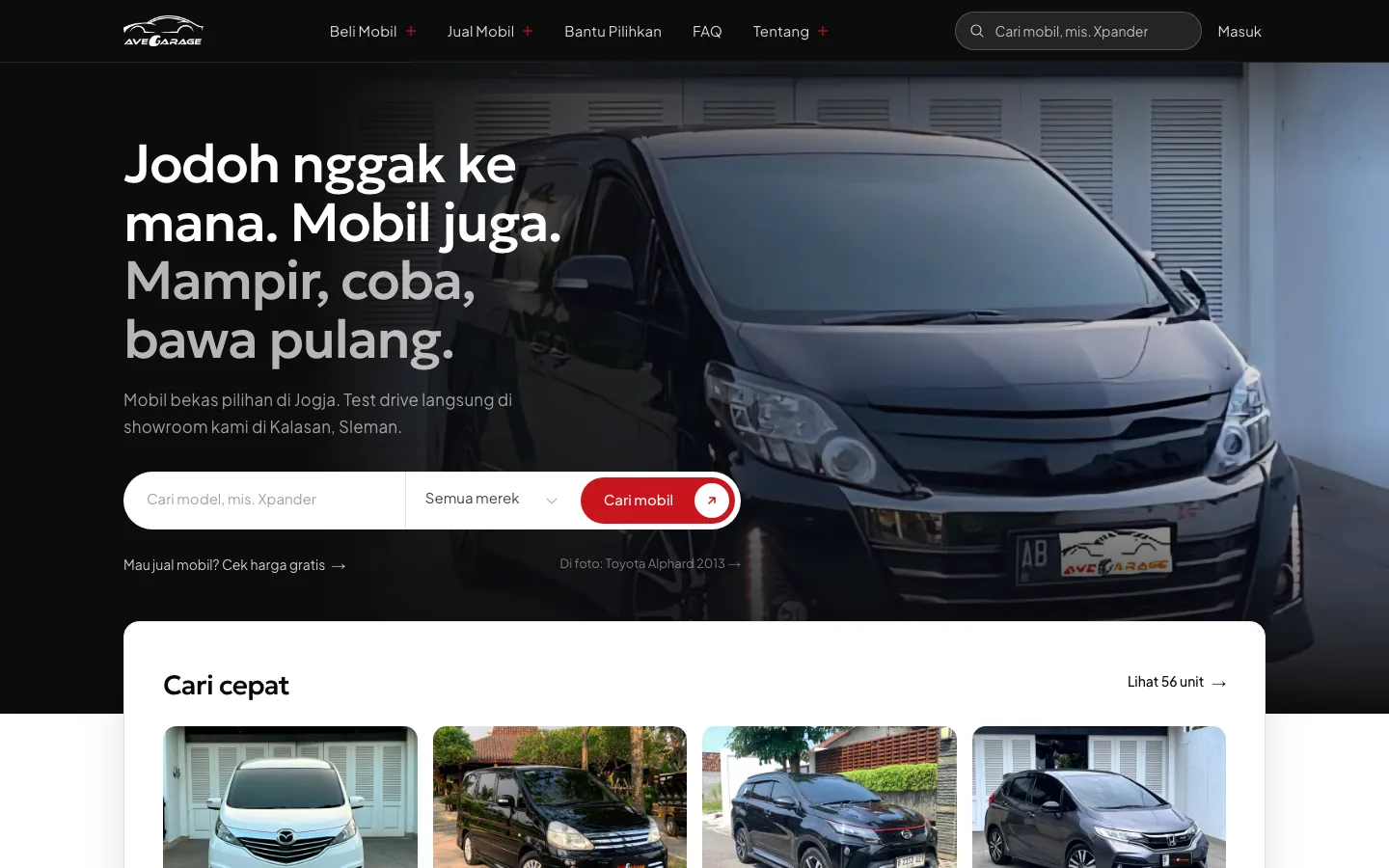
We built a back office that keeps one record per unit, from the day it is bought to the day it is sold, and turns it into real numbers: cost per unit, profit per unit, who sold what, and which cars move fastest. On the front, a showroom site that answers buyers’ usual questions up front and sends serious ones to sales with the right unit already in the chat.
Profit per car
Drag across the panel to see the difference.
Roughly. On record.
What the team gets
The part customers never see, and the reason the numbers finally add up.
AVG-0042 · Cost book
2018 Honda Mobilio E
- Purchase price
- Rp 128.000.000
- Reconditioning: suspensionRecon
- + Rp 3.250.000
- Paperwork: transferPaperwork
- + Rp 1.100.000
- DetailingRecon
- + Rp 650.000
- Holding cost, 38 daysOperations
- + Rp 1.710.000
- Sales commission 1.5%Sales
- + Rp 2.250.000
- Sold for
- Rp 150.000.000
- Net profit
- Rp 13.040.000
Illustration with sample data
One record per unit
Every car gets a stock code, plate and chassis number, how it was acquired (bought outright or trade-in) and its purchase price, so nothing lives only in someone’s head.
Cost book per unit
Paperwork, reconditioning, detailing and marketing costs logged against the car they belong to. Daily holding costs and sales commission are added automatically, so the real profit per unit is always visible.
Every sale accounted for
Who sold it, through which channel (walk-in, marketplace, leasing or partner dealer) and how it was paid: cash, credit or deferred cash.
Stock age and profit & loss
See which units have been sitting too long, with overhead included in the numbers. Rates are frozen when a car is sold, so last month’s profit does not shift when costs change.
What to buy next
An AI buying assistant reads the sales history, the current stock mix and the market, and suggests which models and price ranges to look for next, with its sources.
Less typing, faster posting
Paste a listing or rough notes and the unit details are filled in for review. A caption studio writes ready-to-post captions for each platform, and every inquiry lands in one leads list.


The life of one car
Every unit follows the same path, and every step leaves a record.
The life of one car
Bought
Stock code, plate, chassis number, source and purchase price go in on day one.
Prepared
Reconditioning, paperwork and detailing are logged against the car as they happen.
Listed
The car goes live on the site, captions are ready to post, inquiries land as leads.
Sold
Salesperson, channel and payment method are recorded, and the cost rates are locked.
Reviewed
Profit per car, stock age and suggestions for what to buy next.
What buyers get
Stock you can actually search
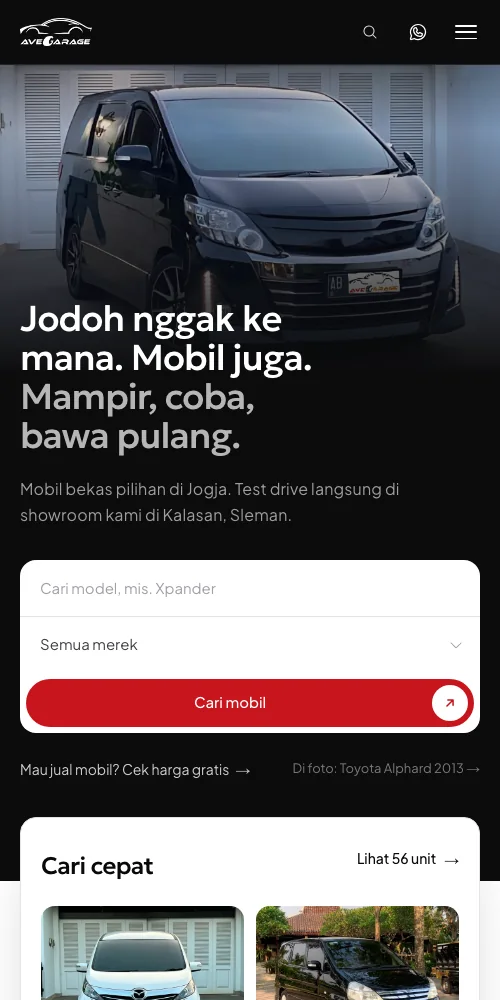
Filter by body type, brand, budget, year and transmission. Every unit shows the cash price and an estimated monthly installment side by side.
Detail pages that answer questions
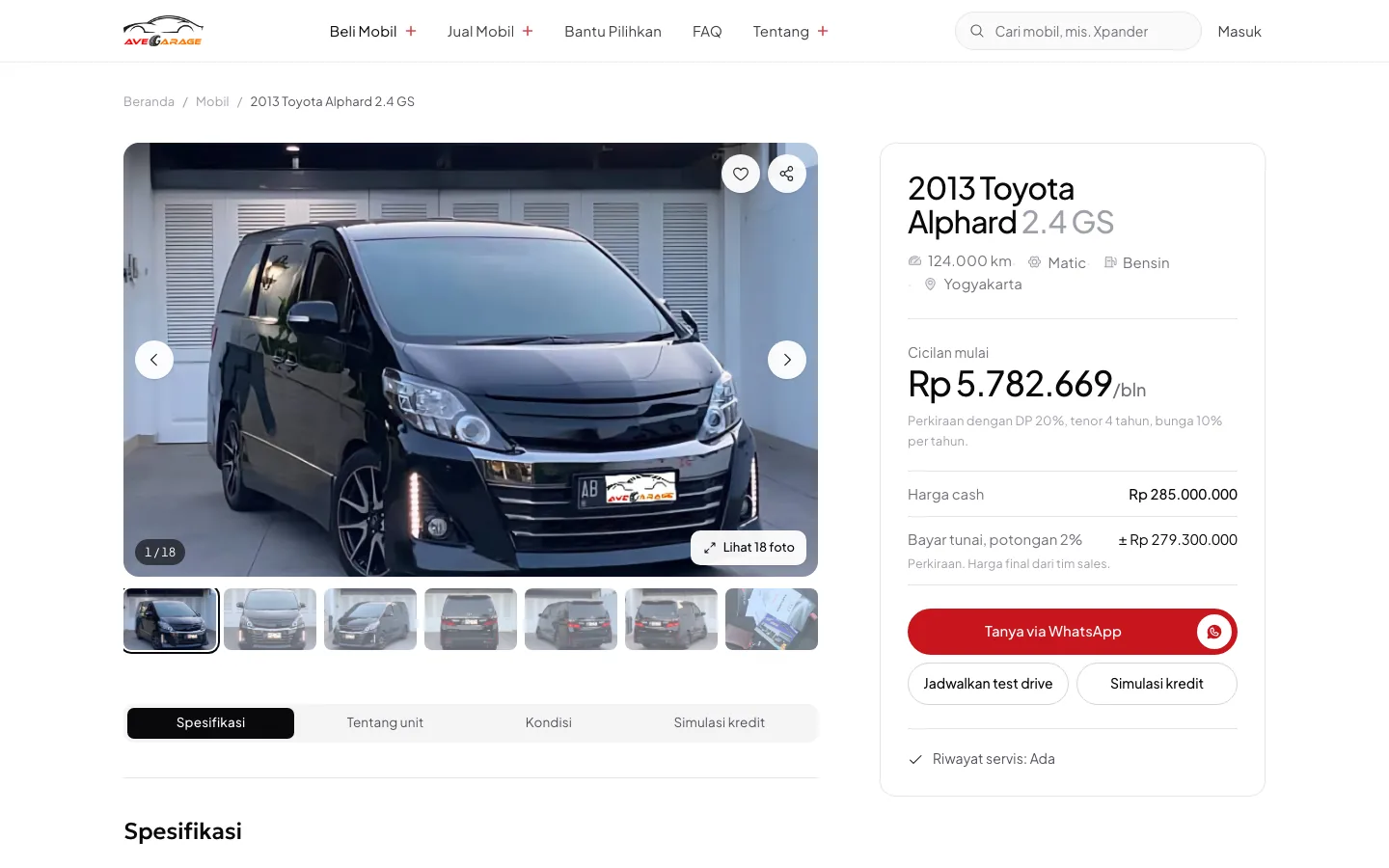
A full photo gallery, specs, condition notes, service history and a credit simulator. One tap opens WhatsApp with the unit already named.
An AI advisor for the undecided
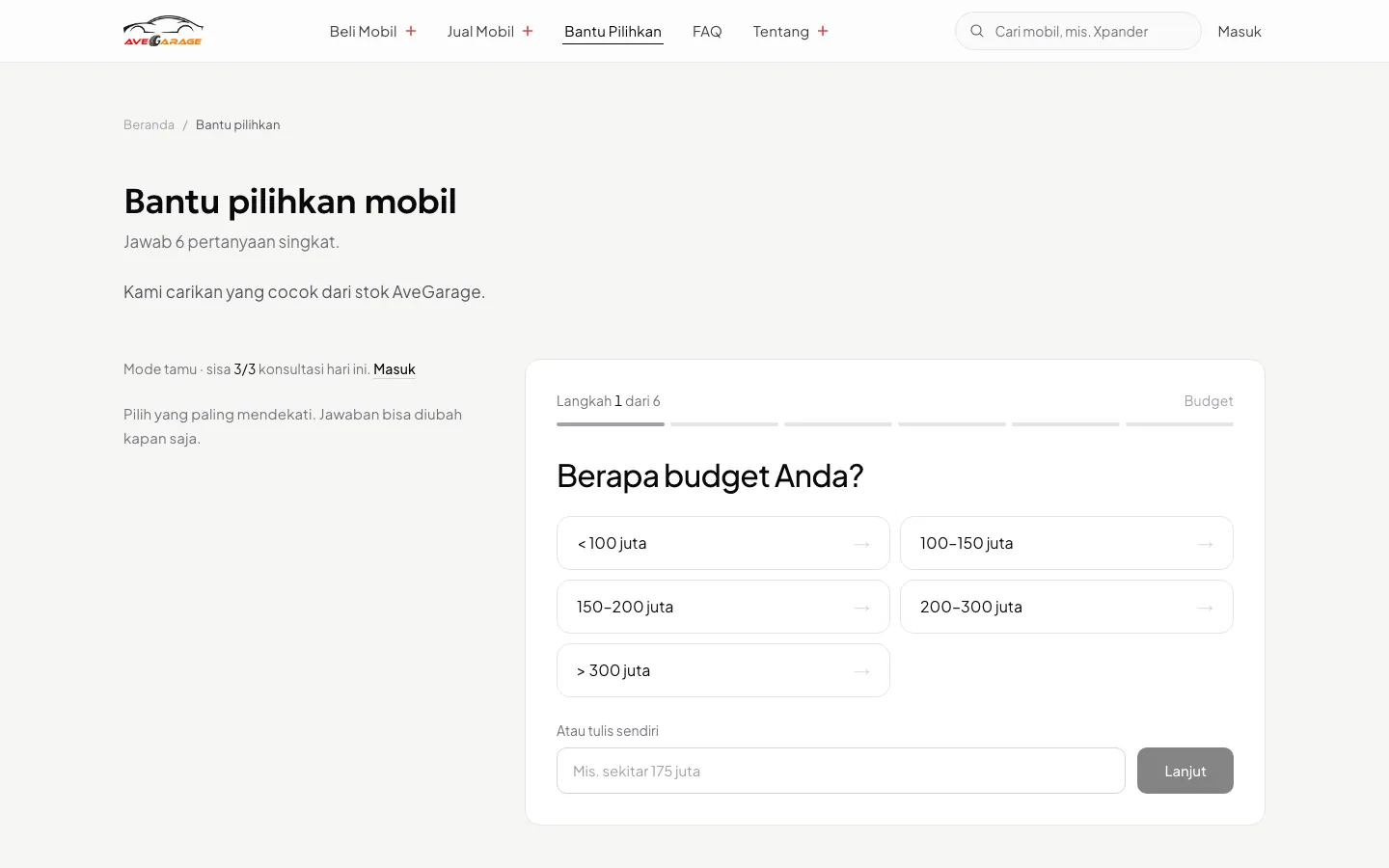
Six short questions about budget and needs, then recommendations matched against the real stock, with honest notes on what to watch out for.
Sell your car, get an estimate
Owners who want to sell get a free price range in a minute, and the showroom gets a qualified lead.